Published on: 07.01.2023
New functionality of Taxmarc 2.1
The new version Taxmarc 2.1 certified for SAP S/4HANA cloud, release 2022 includes the following improvements, among others:
- Compatible with the latest SAP technology (e.g. Fiori)
- Real time graphical overview of document flows for all sales and purchase transactions
- More flexibility to implement complex indirect tax rules
- Time stamp on tax classification changes (If government decides to change a range of products from high rate to reduced rate)
- Validation of material tax classifications per country, for EU countries based on commodity codes (via TEDB database).
- Smart online analyses functionality (all configuration steps that influenced the tax code decision will be shown)
- Improvements regression testing tool
In case of questions, the Taxmarc team is always available to help you.
Published on: 10.11.2022
Optimize your tax codes in SAP, work efficient, save money and time
In the event of rate changes, new tax codes need to be setup in SAP. Over time, this results in a myriad of tax codes causing confusion for your accounting department and leading to errors. Because of the multiple recent Indirect tax rate changes around the world, and the 2-character limit in SAP, companies are even running out of available tax codes.
With the integrated Taxmarc Tax Code Optimization module, no new tax codes are required in case of Indirect tax rate changes. Only the effective Indirect tax rate dates need to be changed in SAP.
A unique feature of this module is the centralized tax rate function. Tax rate changes are set up only at one place without the need to replicate these rates in your sales and purchase conditions. This prevents mismatches and unnecessary errors and saves on maintenance cost. Your sales and purchase tax conditions are simply set up once without a rate.
Published on: 05.07.2023
Taxmarc is not just a Tax engine. It also provides insight into all transaction flows (goods and services) in which a company operates.
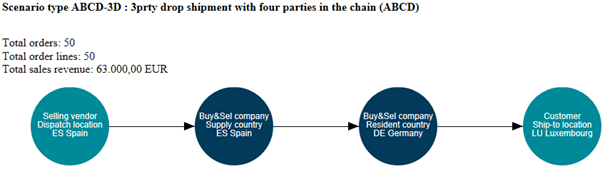
‘s-Hertogenbosch, 05-07-2022: During the creation of each transaction (sales and purchase) Taxmarc will determine what type of flow the transaction is part of. This transaction type will be recorded for each transaction along with all other fields required to make the tax determination. The tax fields can come mostly from standard SAP. The fields that standard SAP does not have but are relevant for tax determination will be added by Taxmarc during the process. See below an example of transaction flows (scenario types) recorded for every transaction.
Using the type of scenario, and the associated tax and supply chain fields, it is very easy to gain real-time insight into the complete business transaction flow model of a company.
The advantages of this data expansion are enormous, such as:
- Gain control over your indirect tax position
- Manage cash flows
- Real time indirect tax analyses
- Transaction mapping real time available
- Insight in all transaction flows which can be used for Transfer pricing
- Customs monitoring on sanctions import/export
- Etc..
Example of transaction flows displayed in graphic mode:


Published on: 10.06.2022
Smart testing approach
‘s-Hertogenbosch, 10-06-2022: Many companies are afraid to adjust their tax configuration in SAP because they do not know what the impact will be on all existing scenarios. To solve this problem, it is common practice to build a point solution. We are pretty sure that you recognize this.
A point solution is never the right solution, because soon your organization will not see the forest for the trees anymore. As a result, the maintenance of the tax solution becomes a labor intensive and expensive burden in the organization.
Because Taxmarc has split their product into Taxmarc agent and Taxmarc core (Please watch our movieTaxmarc Cloud),we are able to run all existing documents through the Taxmarc engine after every configuration change. For every document the tax will be re-determined based on the new configuration. The new tax code will be compared with the tax code already posted on the document in SAP.
Differences will be listed as shown below:

This way, unintended impact of configuration changes is easily identified.
Point solution: a solution for a specific problem rather than a generalized solution.
Taxmarc, automatically in compliance always in control
Published on: 19.05.2022
Does your system enable you to easily assess the impact of registering your company for VAT in an additional country
‘s-Hertogenbosch, 19-05-2022: When your company decides to take a new VAT registration number, it is important to know what the tax impact is on all existing scenarios. To do this as efficiently as possible, you need real-time insight into all business flows that take place in your organization. With the powerful data analysis tool from Taxmarc, which runs in SAP Fiori, or your SAP system, you can get this information in no time. This will give you a quick overview of what part of the business would be impacted.

After adding the new company VAT registration number in your system, the Taxmarc engine will automatically start taking that new number into account. Because Taxmarc is an engine and not a mapping solution, no further set up is necessary. For all transactions from that point forward, the tax determination will be adjusted accordingly.
The advantage of this design is that for a detailed invoice by invoice analysis you can use the Taxmarc simulation tool. Add the new registration number in your quality system, then use the Taxmarc simulation tool to analyze what the impact would be on all your existing flows. Simply run the simulation tool on existing invoices and see which tax outcomes will change with the new registration number.
Taxmarc, automatically in compliance always in control
Published on: 16.04.2022
Points to consider when deciding on a tax engine
‘s-Hertogenbosch, 16-04-2022: In this article we address some important points to consider when selecting a Tax engine and explain why we believe Taxmarc addresses those better than other products on the market.
– Does the solution come with indirect tax content
Taxmarc contains a standard set of tax rules, tax codes, tax rates and tax messages (required to print on invoices). Taxmarc comes with plug and play. This means that all standard SAP document flows can be handled and will lead the correct tax result. Even for tax flows spanning multiple SAP documents (Like an order with intercompany and customer invoice or an order with a drop ship PO)
– Is the solution a tax engine or does it simply map flows to tax outcomes
Taxmarc is an actual tax engine that makes decisions based on input parameters and tax rules. It doesn’t simply map a business scenario to a tax outcome but applies the tax law based on input parameters. The advantage of this is that if your business changes (new company registrations, shipping to or from different countries, using new business flows), Taxmarc handles these new processes without the need for additional setup.
– Is the solution transparent, meaning:
- does your tax department have easy access to all parameters based on which the tax decision for a transaction was made or do you need technical support for this?
- in case of audit can you show to the authorities based on what input the tax decision has been made? Or is the tax determination a black box?
Taxmarc adds detailed overview screens to your sales and purchase transactions that contain all parameters used for tax determination as well as the tax result for all components in the complete flow. From those screens you can visualize the tax decision logic including the configuration settings used. A user will not need extensive SAP knowledge to analyze the tax decision.
The parameters used for the tax determination are stored in your SAP database allowing you to easily provide supporting data for all your tax decisions to the authorities in case of an audit or in case of electronic exchange of data (SAF-T, SII, E-Invoicing etc.)
As an added benefit, your company’s business blueprint is readily available in your system (I.e., what flows do you do, to what country etc.)
– Not all required parameters are available in standard SAP to perform correct tax determination, is the solution able to add these parameters?
Taxmarc adds parameters to standard SAP transactions that are required to make an accurate tax decision. Taxmarc decides what parameters are needed, based on the flow.
Example: in case of an ABC transaction, party A and B are in the EU, party C is in Non-EU. Who will do the export Party A or party B. When party B is doing this from which country? Taxmarc will require 2 additional parameters for this flow: export indicator and export country.
– Does the solution identify incompliant transactions and transactions with incomplete tax data needed to make a valid tax decision
Taxmarc comes with a Tax Control Framework (TCF). The TCF functionality is based on tax logic, and will stop transaction that are not compliant from an indirect tax point of view.
- It checks that all relevant tax parameters are available. The required parameters vary based on the transaction as explained above
- It checks if the transaction is compliant from an indirect tax point of view.
Over 100 different TCF messages are delivered with a clear explanation. The reason for non-compliance is therefore totally transparent. Taxmarc doesn’t just say that ‘tax could not be determined’ but provides details and all the tools needed to analyze and solve the issue. It includes an automatic email alert.
The TCF framework makes sure that Tax is fully integrated in your business. The tax manager is no longer standing on an island waiting to find and correct all tax errors at the end of the month. He will be involved from the moment the business tries to book an invalid transaction.
– Is the solution scalable, is it able to serve your whole ERP landscape and other applications
Taxmarc is built to meet the requirements of an ever changing world. The actual Tax engine (Taxmarc Core) can be called from other SAP systems in your landscape or even from an external (non SAP) system. The Taxmarc Core is also available as a Cloud service hosted by Taxmarc.
‘s-Hertogenbosch, 14-02-2022: Press release
PwC decided to sell the SAP certified Taxmarc solution to an independent company.
Summary transaction
Since 2015 Taxmarc has been part of PwC, an indirect tax solution that has successfully been implemented with multiple multinational companies. The solution fully automates the indirect tax determination process in ERP systems. Per the first of January 2022, the Taxmarc solution has been sold to and will be owned by an independent company, Taxmarc B.V. which will focus on further developing the Taxmarc solution. The change enables both companies to add focus to their activities, to ensure a more sound business model and guarantee a continuation of the solution in case of a potential audit rotation. This will result in more potential for growth of the solution as well as a more competitive pricing model.
Description of the technology
Taxmarc is an internal and external indirect tax engine which solves a company’s indirect tax challenges at the source. Taxmarc automatically determines the correct indirect tax treatment for each individual sales and purchase transaction in the ERP system. The integrated Tax Control Framework checks every transaction on its indirect tax compliance the moment it is entered in the company’s ERP system.
The new set-up
Taxmarc B.V. will continue with the further technical development of the Taxmarc solution, ensuring the solution will keep on using state-of-the-art technology and catering for the global, ever changing, indirect tax landscape. Therefore, the Taxmarc technical resources will join the new company and thus leave PwC. Taxmarc B.V. will be licensing the software solution to its clients. PwC will no longer offer the core technology of the Taxmarc solution, but will continue as Taxmarc implementation partner. I.e. PwC will continue to offer implementation services for (amongst others) the Taxmarc solution for its current and future clients.
As a technology agnostic implementation partner, PwC will be able to provide companies with end-2-end tax software implementation support from strategy to execution: e.g. indirect tax advice, independent strategic advice on which tax software solution best suits its needs, with the implementation of the solution itself and all related aspects of such an implementation.
‘s-Hertogenbosch, 14-02-2022: Adviesbureau PwC heeft de SAP-gecertificeerde belastingtool Taxmarc weer terug verkocht aan de bedenker ervan, Marc van Rijbroek. PwC kocht de oplossing in 2015 maar constateert nu dat het voor de verdere groei beter is het product in een apart bedrijf onder te brengen. Het bureau gaat door als implementatiepartner van Taxmarc.
‘s-Hertogenbosch, 22-02-2022: Tax codes – why we recommend restructuring
Almost every company for which we implemented Taxmarc over the past years admits that their taxcode setup is a mess. We always recommend taking the opportunity to restructure your tax codes as part of a Taxmarc implementation. But although everyone recognizes the problem only a few companies are willing to actually push through this reorganization. Why is that?
Let’s see how most companies got to where they are. SAP comes with a predefined set of taxcodes and tax procedures, so you decide to use them. It looks OK.
| Belgium (TAXBE) |
Netherlands (TAXNL) |
Germany (TAXD) |
A1: Local sale High rate 21%
|
A1: Local sale High rate 21%
|
A1: Local Sale High rate 19%
|
A2: Local sale Red. rate 6%
|
A2: Local sale Red. rate 9%
|
A2: Local sale Red. rate 7%
|
But wait, your Dutch company also has a registration in Germany, so you need German taxcodes in the Netherlands procedure
| Belgium (TAXBE) |
Netherlands (TAXNL) |
Germany (TAXD) |
A1: Local sale High rate 21%
|
A1: Local sale High rate 21%
|
A1: Local Sale High rate 19%
|
A2: Local sale Red. rate 6%
|
A2: Local sale Red. rate 9%
|
A2: Local sale Red. rate 7%
|
|
A3: German local sale high 19%
|
|
|
A4: German local sale Red. 7%
|
|
Not as nice anymore. Then Germany announces a temporary rate change for Covid relief to 16%. So you need new codes in the German procedure
| Belgium (TAXBE) |
Netherlands (TAXNL) |
Germany (TAXD) |
A1: Local sale High rate 21%
|
A1: Local sale High rate 21%
|
A1: Local Sale High rate 19%
|
A2: Local sale Red. rate 6%
|
A2: Local sale Red. rate 9%
|
A2: Local sale Red. rate 7%
|
|
A3: German local sale high 19%
|
A3: Local Sale High rate 16%
|
|
A4: German local sale Red. 7%
|
A4: Local sale Red. rate 7%
|
And of course also the Dutch company needs to apply these reduced rates in Germany
| Belgium (TAXBE) |
Netherlands (TAXNL) |
Germany (TAXD) |
A1: Local sale High rate 21%
|
A1: Local sale High rate 21%
|
A1: Local Sale High rate 19%
|
A2: Local sale Red. rate 6%
|
A2: Local sale Red. rate 9%
|
A2: Local sale Red. rate 7%
|
|
A3: German local sale high 19%
|
A3: Local Sale High rate 16%
|
|
A4: German local sale Red. 7%
|
A4: Local sale Red. rate 7%
|
|
A5: Local Sale High rate 16%
|
|
|
A6: Local sale Red. rate 7%
|
|
And pretty soon you can’t see the forest for the trees anymore. Your AR people need to know that really A3 = A1 and A4 = A2 etc. depending on what country you are in. Selecting the right code gets complicated and reviewing transactions and tax returns is cumbersome.
Not to mention of some companies that run out of codes because they are registered in 3010 or more EU or even Non-EU countries.
Taxmarc comes with a set of predefined taxcodes that are set up logically and can be used worldwide. And thanks to the Finance Taxcode solution module, these codes will NEVER CHANGE. And even better, all these taxcodes and the corresponding condition records for sales, purchase and finance are included in your Taxmarc installation. So the implementation of Taxmarc is a great moment to restructure. Your above setup would look a lot simpler and again WILL NEVER CHANGE.
| Belgium (TAXGLB) |
Netherlands (TAXGLB) |
Germany (TAXGLB) |
B1: Local sale High rate 21%
|
N1: Local sale High rate 21%
|
G1: Local Sale High rate 19% or 16%
|
B2: Local sale Red. rate 6%
|
N2: Local sale Red. rate 9%
|
G2: Local sale Red. rate 7% or 6%
|
|
G1: German local sale high 19% or 16%
|
|
|
G2: German local sale Red. 7% or 6%
|
|
The taxcodes are constant and the correct percentage will be picked up based on the taxdate of the posting you are making. There is no need to define percentages separately in Sales, Purchase and Finance. All rates will come from the same source (finance).
What are you afraid of…
What we hear a lot during our implementations is that we want to restructure our Taxcodes but not now, not as part of this project. We will do it later. The reality is that if you don’t do it know, you will never do it. Let’s address some of the concerns.
- But I will have to redo all my sales and purchase tax conditions
If you decide to use the Taxmarc taxcode template and install the Taxmarc sales and purchase engine, all sales and purchase conditions are included. You don’t have to do anything.
- But what if I mistakenly post with the old codes
Since the tax procedures are changed, the old codes can no longer be used. The only risk is that if you cancel a sales or purchase invoice or an FI posting, the reversal would copy the old code to the cancellation document and post it in the new period. We can’t have this. Taxmarc will prevent cancellation of any document created before the restructuring so no mixed taxcodes can occur.
- I will have to retrain my users to use the new codes
This is true. But this is a worthwhile investment. You train them one time and never again. With your old setup you have to instruct them to use different tax codes any time there is a rate change. And you have to rely on them to pick the correct code based on the posting date. With Taxmarc they always use the same code and we make sure the correct rate is picked up. In addition different companies will use the same consistent set of taxcodes
When you implement Taxmarc that is the right moment to take a hard look at your taxcodes and restructure them. And as part of this project you will have partner that can guide you through the process from A-Z.
So, take it from the people who have done it, a taxcode restructuring is not as scary as you think and it is an investment that will definitely pay off, in the form of less training, less work, clear indirect tax reports and fewer mistakes.
You’ll be thanking us for talking you into it!
Published on: 22.02.2022
‘s-Hertogenbosch, 22-02-2022: We are proud to announce that Taxmarc is again certified for R/3 this year. Taxmarc was and is certified for both R3 and S/4 HANA.
We are continuously improving and extending our product and stay in line with SAP standards at all time.